Indonesian National Everest Expedition
The ClimbThe Indonesian National Everest Expedition was a 1997 Everest campaign shaped by a tension between national ambition and the hazards of taking inexperienced climbers into the Death Zone. Recruited as lead climbing consultant after the 1996 disaster, Anatoli Boukreev tried to define a role based on training, advice, and rescue rather than a promise of summit success. The team did reach the summit, but a late, difficult descent left its members spending an improvised night at Camp V, where the climbers’ survival depended on cooperation and careful sharing of oxygen.
Formation and objectives
In the fall of 1996, Ang Tshering of Asian Trekking asked Boukreev to consult for an Indonesian team planning a spring attempt on Everest by the Southeast Ridge. The mountain was not a fresh objective for him: he had guided the same route the previous year for Scott Fischer, and he wanted to return both to work in a leadership capacity and to address unfinished personal business from the disaster. Among his reasons for going back was the wish to arrange respectful burials for Fischer and Yasuko Namba. He also hoped to find a sustainable place for himself in commercial high-altitude climbing without surrendering his convictions about the sport.
Boukreev met the Indonesian organizers in Kathmandu and then traveled to Jakarta to discuss the expedition with General Prabowo Subianto, its national coordinator. He described the outlook bluntly: he estimated only a 30 percent chance that any one climber would summit, while judging the chance of losing someone on the mountain to be fifty-fifty. He proposed a year of preparation on progressively higher peaks. The organizers rejected that plan, and Prabowo said the men were motivated, fit, and committed even if the objective involved the prospect of death. Boukreev accepted the work only on the condition that he would have absolute control of final summit-day decisions and could stop an attempt if the people or mountain conditions made it unsafe. The agreement also recognized that a rescue team could not guarantee an effective rescue above 8,000 meters, although Boukreev was willing to risk his life in that role.
Training, selection, and organization
The initial training group comprised 34 people: civilians with some climbing experience and military personnel who were fit and disciplined but had no mountaineering experience. Selection was to depend on health, endurance, ability, and attitude, alongside technical competence with ropes and ladders and basic mountaineering skills. In December, 34 climbers attempted Paldor Peak in the Ganesh Himal after 21 days of gradual winter acclimatization; 17 reached the 5,900-meter summit. The training and selection process made the expedition’s mixed experience explicit rather than treating fitness or military discipline as substitutes for mountain skills.
The eventual division of the Indonesian team reflected a disagreement over the expedition’s plan. Boukreev recommended that the climbers attempt Everest from the south only, but the Indonesians also hired Richard Pavlowski to lead a northern team. Ten members went with Boukreev to the south side and six went north to Tibet. The south-side climbers rested for 26 days after Island Peak. Boukreev wanted his team to reach the mountain first and avoid competing with other expeditions for the route on summit day.
Ang Tshering supplied logistical support and hired the Sherpa staff. Apa Sherpa, then a seven-time Everest summiter, served as sirdar and lead climbing Sherpa. The Sherpas were responsible for Base Camp support, fixing rope above the Icefall, establishing and supplying camps, and carrying the additional oxygen needed on summit day. This division of labor was intended to leave the climbing advisers free to attend to the Indonesian climbers and difficult conditions on the route.
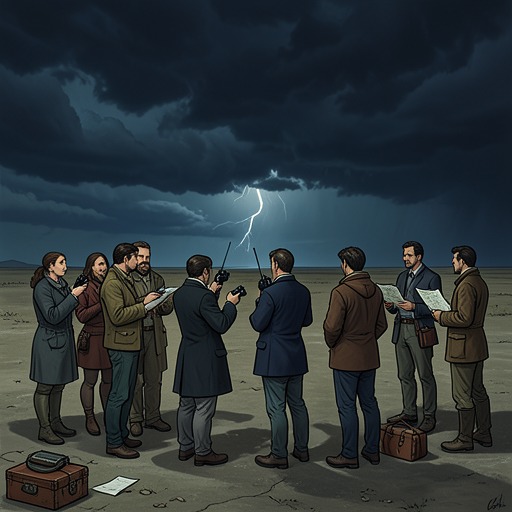
The expedition also tried to correct a communications weakness Boukreev recognized from the previous season. He requested radios for every team member, direct radio contact between Base Camp and support in Kathmandu, and daily weather reports from the meteorological service at Kathmandu airport. The Nepalese Army helped arrange the support link, while expedition officer Monty Sorongan, who spoke English well, was to coordinate communications between the mountain and Kathmandu. English was agreed as the common language among the climbing staff. These changes were designed to reduce the risk of omissions and misunderstandings between responsible parties.
The summit push and the improvised bivouac
The expedition’s difficulties took place within a crowded and interdependent climbing season. During the 1996 attempt, Mountain Madness had planned four acclimatization excursions, with clients carrying only personal gear while Sherpas transported rope and supplies. Later, the team sent Anatoli Boukreev to contribute to fixing the route between Camps III and IV, part of a joint effort involving several expeditions. On summit day, however, climbers from the Fischer and Hall teams encountered unfixed ropes where they had expected the route to be prepared in advance. Accounts also describe a summit strategy without a definite cutoff time for Fischer’s clients: guides were to alternate at the front, Fischer would bring up the rear and turn back stragglers, and radio contact with Lopsang was expected to help manage problems. These earlier details form part of the background against which Boukreev approached the Indonesian expedition with demands for clearer authority, preparation, and communication.
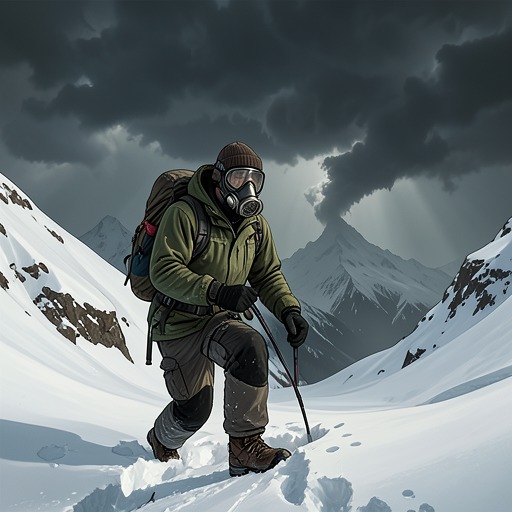
On the Indonesian expedition’s summit day, the team reached the summit late. The members then descended over old ropes that Apa had pieced together for the traverse. They reached the South Summit at 5:00 p.m., moving slowly, with Boukreev bringing up the rear. Misirin fell several times but got up and continued. Iwan, using Evgeny Vinogradski’s oxygen, became disconnected from the rope and fell at the fixed-line junction; Vinogradski caught him and pulled him back onto the rope, preventing a fall of more than 100 meters. Asmujiono was moving well and descended with the Sherpas.
Boukreev moved to the front and used his headlamp to light the route in the twilight. By 7:30 p.m., all the Indonesian members had reached Camp V with him; Bashkirov and Vinogradski arrived about an hour later. Only the Indonesian climbers were still using oxygen. The tent at Camp V was missing two pole sections and functioned more like a large bivouac sack than a proper emergency shelter. It contained a stove, pots, gas, a Karrimat, and two full oxygen bottles. Apa wanted to descend with Dawa Sherpa; Boukreev allowed it, with radio contact planned for the morning.
The night required sustained cooperation. Vinogradski began heating water as soon as he arrived and continued through the night. Boukreev and Bashkirov took turns moving an oxygen mask among three exhausted Indonesian summiters so that the supply would last. When one climber had to wait too long for the bottle, he cried or prayed. The account presents the night not as a triumphant extension of the summit, but as a prolonged effort to manage the immediate consequences of a slow descent with limited shelter and oxygen.
Outcome and significance
Misirin, Asmujiono, and Iwan descended with Apa, Dawa, Bashkirov, Vinogradski, and Boukreev. The expedition had achieved its objective, but Boukreev described the outcome as one in which many people had contributed and luck had mattered above all. He also reflected that the successful ascent could encourage other inexperienced people to enter the mountains. For him, a team member’s death would outweigh any summit success, and neither advice nor a rescue role could guarantee safety in the face of altitude, physical deterioration, and natural conditions. His distinction between consultant and guide was therefore not a claim that the expedition’s risks belonged to someone else; it was an attempt to state the limits of what a professional could promise and the responsibility climbers still had to accept.
After the expedition’s success, the Indonesian climbers, Boukreev, and the other Russian consultants returned to Kathmandu to celebrate and complete the expedition’s business. In mid-May, Boukreev flew back to Lukla with a friend and began trekking toward Everest Base Camp to assess weather and mountain conditions for a possible Lhotse–Everest traverse. The expedition thus concluded both with a completed national summit objective and with Boukreev’s continuing engagement with the mountain, whose risks had not been resolved by the success.